
INTRODUCTION
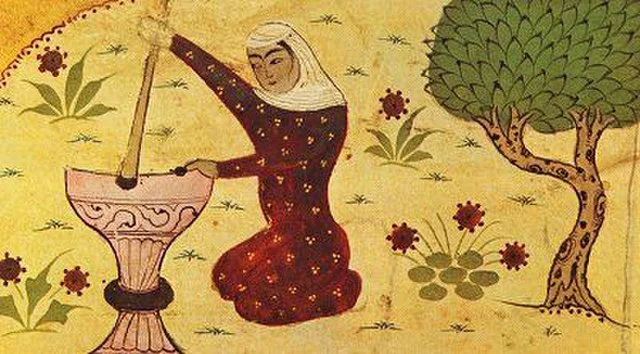
Rābiʻa al-ʻAdawiyya al-Qaysiyya
“With two loves I have loved You. With a love that is selfish, and a love that is worthy of You.”(1) I winced as my tired eyes lingered over these words written by eighth-century Sufi mystic Rabi’a al-Adawiya. Her words rang true to my own experience. Two years ago, in May, it felt as though all of the joy had been sucked out of my relationship with God and everything else, for that matter. The shift was subtle. Initially, I blamed a lot of things: “Well, I graduated from college this month. I must just miss my friends.” “Maybe it’s seasonal depression? Ohio isn’t nearly as sunny as Oklahoma was.” “My new job is hard. I’m sure the joy will return once I’m settled.” “I’m doing a lot of trauma work in therapy right now. I’ll feel better soon enough.” Slowly, I started to realize what was going on within me. The excitement of college ministry within the charismatic community stimulated my false self like a drug. My senses had been constantly overloaded. My new life was slower, more contemplative, and no longer marked by the praise and adoration that had characterized my previous life.
I was detoxing.
The part of me that loved God for selfish reasons was dying. Because this was the very part of me through which I had first learned to know and love Him, God began to feel like a stranger. Anxiety set in. No matter what I tried, I could not recover the spark. Eventually, I gave up on the spark and accepted my new experience. Depression followed. I didn’t want anything other than God, and missed Him terribly, but I couldn’t seem to find Him anywhere. I felt trapped in an impasse—I hated where I was, yet had nowhere else to go. I had seen too much to walk away from Jesus. It took me a year and a half to identify what was happening to me. I felt a rush of relief when I discovered Saint John of the Cross’s The Dark Night of the Soul. In this short treatise, he described a process in which God purges the soul of sin and leads it into maturity through the gift of darkness. John of the Cross describes the dark night as follows:
This dark night is an inflowing of God into the soul, which purges it from its ignorances and imperfections, habitual, natural, and spiritual, and which is called by contemplatives infused contemplation, or mystical theology. Herein God secretly teaches the soul and instructs it in perfection of love, without its doing anything, or understanding of what manner is this infused contemplation. Inasmuch as it is the loving wisdom of God, God produces striking effects in the soul, for, by purging and illumining it, He prepares it for the union of love with God.(2)
The dark night of the soul, far from being a sign of spiritual failure, is a necessary stage of spiritual transformation that has been largely neglected within contemporary Western Christianity. In my own dark night of the soul, I was being purged of the false self, and I didn’t know it. Upon this discovery, I began to ask, “Why had no one told me about this part of the spiritual journey?”
(1) Elmer O’Brien, S.J., Varieties of Mystic Experience: An Anthology and Interpretation (New York: Holt, Rinehart and Winston, 1964), 103.
(2) St. John of the Cross, Dark Night of the Soul, trans. E. Allison Peers (Garden City, NY: Dover Publications, 2003), 47.
The first quote sent me down a deep path of reflection. This was such a beautiful and eloquent story. I pray my heart is constantly reminded of the symbiotic love flow with the Creator as I undergo the process the spiritual transformation in this life.