
Synesius of Cyrene and Hypatia of Alexandria:
The Patristic Canon, Classical Paideia and Philhellenism
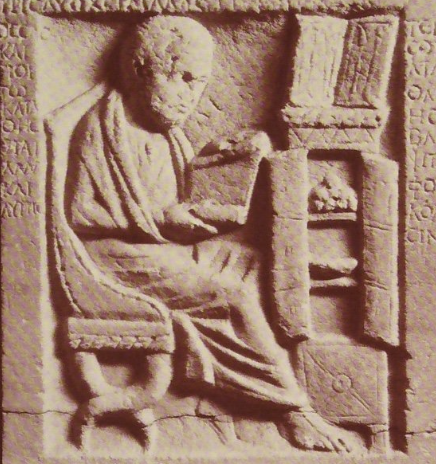
Synesius of Cyrene
Synesius of Cyrene (373-414 CE) and Hypatia (355-415 CE) are thought to be two of the finest embodiments of Neo-Platonic philosophy and Christian Platonism in the Late Antique world and ethos. There has been a turn in the last few decades within Christianity to the Patristic Tradition (East and West) as a needed corrective to the limitations and reactionary nature of protestant theology. Many of the finest Christian contemplative philosophers and theologians (and their turn to both the contemplative and wisdom tradition of Plato) have been well mined and gold brought to the much-needed surface. But, in this turn to such a heritage, there has been a predictable tendency to ignore both Synesius (the Platonic-Philosopher Bishop) and his mentor Hypatia (Greek meaning highest or supreme). This short reflection will, in some ways, urge a turn to both Synesius (a “hapax” not to miss in the Patristic canon) and Hypatia as a needed corrective to their omission in much Patristic thought and life. I might add, without walking further down such a trail and pathway, that Homer is the fount of Greek thought, his literary approach, concealing a deeper philosophical and theological vision, most Pre-Socratic, Greek Tragedians and Plato-Aristotle reading Homer in an allegorical way (even though Plato seeming to do a literal read and rejection). Synesius, I might add, was replete with quotes and passages from Homer and Plato. There is a sense, also, that Synesius is engaged in the same synthesizing process as Nonnus and Boethius, a tradition not quite the same as the Fathers East and West. But, to the reflection.
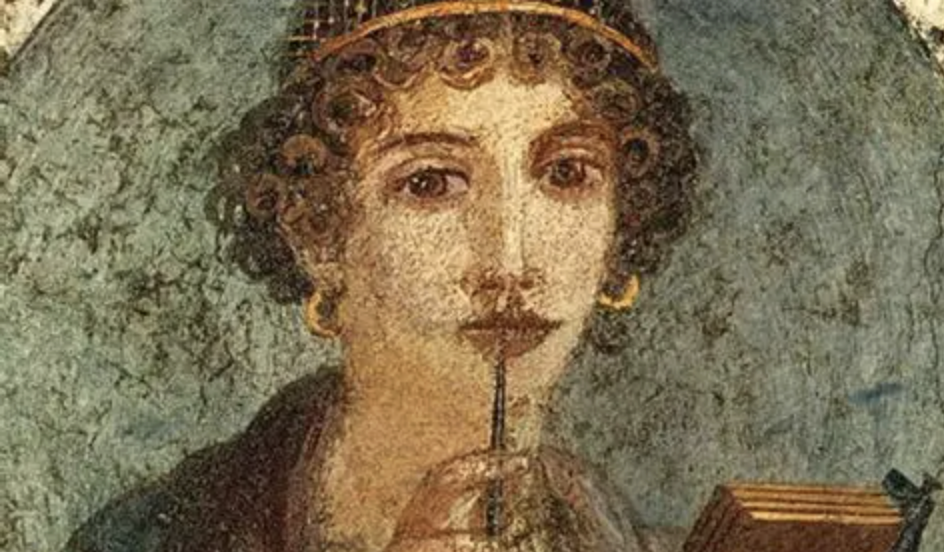
Hypatia
There has been a dishonest tendency by some reactionaries to see the brutal killing of Hypatia by extreme Christians as a clash between thoughtful philosophers and mindless fideistic Christians, the former enlightened thinkers, the latter aggressive and violent religious types. Sadly, such extreme types are then equated with authentic and mature Christianity. Needless to say, nothing could be further from the more nuanced truth. Hypatia was a generous woman who had many religious people study with her and respected each of them, her sense of public responsibility integrated well with her rigorous notion of wisdom and the common good. Hypatia did, as a sound philosopher, raise deeper questions about the journey into the virtues and wisdom, her teachings and life drew the best and brightest in Alexandria. Sadly so, Alexandria had a history within Christianity of being pulled in two opposite directions. There were the more thoughtful Christians that had matured under the layered and insightful teaching of Clement and Origen and there were the reactionaries to their interpretations and applications of the sacred texts and neo-platonic philosophy.
The two Patriarchs that dominated the late 4th-early 5th centuries in Alexandria were Theophilus (385-412) and Cyril (412-444). Both men tended, for various reasons and in different ways to oppose much of the classical tradition that once shaped significant educational life in Alexandria. Hypatia was a significant defender of such a more nuanced and classical philosophical way and she worked closely with the Prefect of the city, Orestes, to bring a higher and fuller vision of such a way of being. Many young and thoughtful men and women came to study with Hypatia, including Christians who longed for greater depth in their thinking and life journey. The fact that Hypatia drew the best and the brightest, including Synesius, who travelled from Libya to study with Hypatia, did mean, increasingly so, the ire of Theophilus and Cyril.
Cyril tended to draw to himself some of the more simplistic and fundamentalist Christians who saw themselves as the true defenders of the faith versus the Christians who had been and were being polluted by their interest in Classical philosophy and its significance for the faith journey—such were the parabolans or parabalani—those who, in a metaphorical sense, threw javelins at their opponents, including men and women of Chistian faith who found in the teachings and life of Hypatia significant inspiration, Synesius, as mentioned above, but one of many who studiously sat at the feet of Hypatia of Alexandria. The fact Cyril gathered round him such reactionaries (even though remembered as an astute theological father of church) meant it was just a matter of time before a collision would occur in Alexandria between an increasingly so reactionary form of dogmatic Christianity and a deeper and more thoughtful form of classical and contemplative Christianity. Hypatia was seen as the Diotima of the latter group and in March 415 CE the parabolans turned on her and violently killed her. The debate ever turns on how close Cyril was involved in this brutal murder, but the result was an outrage by most in the city, with the Cyril-parabolans seriously marginalized by the event.
Synesius died (only 41) in 414 CE, a year before the death of Hypatia, but his indebtedness to her cannot be ignored. The 10 Hymns of Synesius and the 159 extant letters (reflecting much about Late Antique life) are beauties one and all should read and inwardly digest. There are 7 letters (10, 15, 16, 33, 81, 124 and 154) addressed to Hypatia in the larger collection. I will, in the remainder of this reflection, linger with some of the 10 Hymns (better seen as philosophical and poetic psalms, theology and Plato wed in a compelling manner). I will, in the next reflection, sit with the 7 letters of Synesius to Hypatia.
Needless to say, there are various ways of interpreting Synesius (his hymns and many other writings). Was he first and foremost a Platonist who reduced Christianity to a nuanced Platonic theology and philosophy (quite different from the Western-Eastern Fathers of the Church)? Or was he an exquisite and nuanced synthesizer of the best and most mature of both Traditions, an extremely gifted contemplative philosopher-theologians who offers the attentive and curious reader another way of understanding how the revelatory tradition of Plato and the revelatory tradition of emerging Christianity can be wed in a unique and creative manner? The 10 Hymns (and Synesius did write many other books on providence, dreams, kingship and much else) will be our focus for the remainder of this reflection.
Six Themes in the Ten Hymns
I will lightly land on six main themes in the Ten Hymns that recur again and again in the poetic yet philosophical-theological psalms-hymns of Synnesius.
First, there is the ascent of the soul, wings wide spread, of the true self to the homeland, source and centre of the Divine. The metaphor of the wings is from Plato’s PHAEDRUS and the ongoing tension being a longing to fly homeward yet choices made that make the wings heavy with debris. “Arise My Soul” (I) ends with, aptly enough, deification as the true end—“For Godlike thou shalt be-in God complete”
Second, most of the hymns are replete with exquisite images of Nature and the bounty and beauty of Nature, Nature an icon and pointer for the journey and journey’s end. The lavish attention Synesius gives to Nature makes it abundantly clear that the world of matter and time is not something to ignore or discard on the ascent to the Divine, matter being messages to heed and the pathway to walk on such a pilgrimage. In fact, all the cosmos, planets in their order and places, angles and archangels in abundance and song, all things charged, as Hopkins would say, with the grandeur of God-such was the larger vision of Nature-Cosmos that Synesius saw and articulated in his Hymns. We can certainly see in the Hymns-Cosmology if Synesius that ethos and worldview so well described by C.S. Lewis in THE DISCARDED IMAGE: AN INTRODUCTION TO MEDIEVAL AND RENAISSANCE LITERATURE.
Third, There is little doubt that Synesius is acutely aware of the transient nature of time bound experiences and the flux of Nature, hence the longing, hunger and thirst for the stable core and permanent things beyond the ever changing nature of time—such is a tension in many of the hymns—how is the longing to be One with the Eternal rather than an escape from time the very means to engage the challenging issues of time and history, flux and transience?
Fourth, It is impossible to miss in each hymn the references, again and again, to God the Father, God the Son and God the Spirit, at an Ultimate level One and Indivisible yet also the embodiment and Incarnation of God, Father, Son and Spirit in time and history, ever drawing the soul homeward. There are some who doubt whether Hymn #10 is by Synesius, given its much shorter yet obvious compact Christian theology but such an approach hinges on how Synesius is interpreted in his unfolding faith journey. I think it is more honest suggest Hymn #10 is a compact summary of the theology of Synesius that summarizes Hymns #1-9. Hymn #7 is a must read in that Synesius threads together, in an intricate manner, a rigorous and thoughtful Christology with the Mago who came to see the Child Christ, message not to be missed– it is the searching wise that see and respond to what is seen in the stars and constellation, Cosmos and Nature pointing to the fuller message and song to be played on the lyre of Synesius.
Fifth, Hymn #3 is the longest and, in some ways, the most confessional of the Hymns of Synesius although Hymn #8 leans in such a direction. We get multiple hints in various Hymns of the public life Synesius lived, his engagement with substantive political issues and the wear and tear on the soul it took on him—his clash with Andronicus (Governor of Libyan Pentapolis in 411-412) cannot be missed in some of the Hymns and Letters 58 & 72 delve more fully into such a political and ecclesial clash with unjust political leadership as embodied in Andronicus. Needless to say, Synesius had multiple questions and doubts about the way many Christians interpreted and embodied their faith journey (at the highest and lowest levels), so his role as both bishop and public servant made its demand on his tender soul. The use of Epimetheus and his foolish opening of Pandora’s Box cannot be missed Hymn #3 (an ever recycled dilemma) just as Thrace-Thracians (metaphor for aggressive Ares) speaks much about who Synesius confronted in public life in his faithful journey.
Six, the not-to-be-missed Harrowing of Hell in Hymn #9 and how it is linked wisely so with Hesperus (the evening star). And #10, as Christ the Divine Physician who comes to heal our soul ailments and sets us free cannot ignored or missed in these parting hymns—Christ freeing one and all who heed the invitation from their Dante-like Inferno and small self. The Divine Physician brings the healing medicine and Hesperus the light through the dark into the new day. #9-10 are short intense hymns that midwife a new and higher way of being and Divine Life.
The young Synesius, as did many thoughtful men and women of his generation, were drawn to philosophy as a contemplative way of being, the Platonism of the time, offering a thoughtful and challenging way to understand the journey to the Ultimate and, in time, to the Christian God, Hypatia a significant bridge in such a journey. The final few years of the short life of Synesius were not easy—his role of Bishop, his children dying, clashes with political and religious authorities and much else. The trying task of threading both the ascent to the Divine and the integration of ascent and descent into the flux of time was at the core of the organic vision of Synesius—he, in many ways, embodied the classical synthesis of paideia in which true formation and wisdom is embodied in the church and world rather than a retreat from it.
PS I: It is somewhat disappointing that Synesius, when in Constantinople from 399-402 CE, did not meet John Chrysostom-many could have been their dialogues and conversations about the faith journey, politics and classical paideia.
PS II: Those interested in a more theatrical and not fully accurate version of Hypatia-Synesius should watch the 2009 film AGORA. If, interested in a more nuanced and historically accurate primer on the topic, do a read of HYPATIA OF ALEXANDRIA (1995) by Maria Dzielska or the more updated and comprehensive HYPATIA: THE LIFE AND LEGEND OF AN ANCIENT PHILOSOPHER (2017) by Edward Watts-there are some good interviews-podcasts with Watts on Hypatia worth the watching and listening to. Those keen on a certain read of Synesius (that is worth the read but done critically), SYNESIUS OF CYRENE:PHILOSOPHER-BISHOP (1982) by Jay Bregman is worth the lingering with, although other reads needed to offset his interpretation.
PS III: There has been, with the waning of Christianity as a major cultural reality, a turn to an idealized vision and version of the classical Greek Tradition—this is called “Philhellenism” or “Graecomania.” There is a sense within such an ideological interpretive tradition an alternate philosophical perspective to Christianity—rather than a deeper integration and synthesis as embodied in Synesius, we see a romanticised read of the Greek way and various forms of dismissing Christianity as dated and waning. Those interested in delving further into the “Philhellenic” approach should read Konstantinous Polias’ fine reflection, “The Philhellenic Dimension among Philosophers and Intellectuals in Europe during the 18th and 19th centuries.”
amor vincit omnia
Ron Dart