
 Imagine you’re in charge of pastoring a congregation amidst a war. What does it mean to love your enemies when violence is outside your window, and visceral images of your congregation’s devastation fill your phone? How would you find hope and carry on?
CLICK HERE TO LISTEN
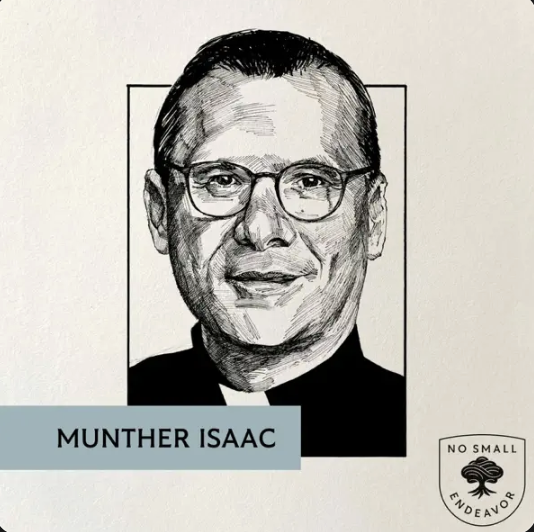
Palestinian Lutheran pastor Munther Isaac joins Lee C. Camp from his home in the West Bank to discuss his book Christ in the Rubble: Faith, the Bible, and the Genocide in Gaza. Drawing from his experience shepherding congregations through two years of war, Munther reflects on grief, anger, and the moral danger of becoming numb to suffering, while still insisting on nonviolence, justice, and the stubborn call to love of enemy. This conversation wrestles with the collision of politics and theology, the misuse of religious language, and what authentic human flourishing, meaning, and courage can look like in the midst of rubble.
Key Ideas:
- Christ also asked where God was amidst suffering. Munther insists that, in Gaza’s devastation, God is not distant but present “under the rubble,” with the oppressed, displaced, and grieving.
- Nonviolence and creative resistance are needed to break cycles of violence. What it means for a Palestinian pastor to reject terrorism and militarism, yet still speak of “creative resistance in the logic of love” as a practice of justice, courage, and meaningful living.
- Language can be used to warp our imagination. How labels like “terrorism” and “self-defense” can distort moral vision, and why Munther believes reclaiming moral language is essential to the common good and the search for meaning and purpose.
- To stop loving is to lose our humanity. Munther’s insistence that true happiness and well-being require refusing to dehumanize even one’s enemies, guarding the heart from numbness, and insisting that we are created to love one another.
- Religious imagination has real-world implications. Theological worldviews often shape policy, war, and public imagination. Munthers asks, what might it mean for theology and culture to serve justice, mercy, and flourishing instead?
A warning to our listeners—this episode contains descriptions of violence and graphic imagery. Please listen with care.