
O Happy Night: The Dark Night of the Soul as a Forgotten Stage of Spiritual Formation – Jasmine Matthews
INTRODUCTION
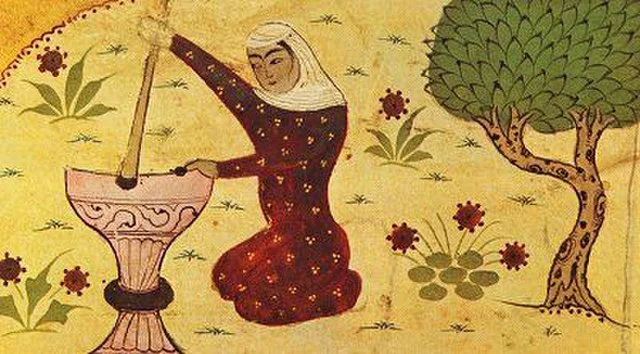
Rābiʻa al-ʻAdawiyya al-Qaysiyya
“With two loves I have loved You. With a love that is selfish, and a love that is worthy of You.”(1) I winced as my tired eyes lingered over these words written by eighth-century Sufi mystic Rabi’a al-Adawiya. Her words rang true to my own experience. Two years ago, in May, it felt as though all of the joy had been sucked out of my relationship with God and everything else, for that matter. The shift was subtle. Initially, I blamed a lot of things: “Well, I graduated from college this month. I must just miss my friends.” “Maybe it’s seasonal depression? Ohio isn’t nearly as sunny as Oklahoma was.” “My new job is hard. I’m sure the joy will return once I’m settled.” “I’m doing a lot of trauma work in therapy right now. I’ll feel better soon enough.” Slowly, I started to realize what was going on within me. The excitement of college ministry within the charismatic community stimulated my false self like a drug. My senses had been constantly overloaded. My new life was slower, more contemplative, and no longer marked by the praise and adoration that had characterized my previous life.
I was detoxing.
The part of me that loved God for selfish reasons was dying. Because this was the very part of me through which I had first learned to know and love Him, God began to feel like a stranger. Anxiety set in. No matter what I tried, I could not recover the spark. Eventually, I gave up on the spark and accepted my new experience. Depression followed. I didn’t want anything other than God, and missed Him terribly, but I couldn’t seem to find Him anywhere. I felt trapped in an impasse—I hated where I was, yet had nowhere else to go. I had seen too much to walk away from Jesus. It took me a year and a half to identify what was happening to me. I felt a rush of relief when I discovered Saint John of the Cross’s The Dark Night of the Soul. In this short treatise, he described a process in which God purges the soul of sin and leads it into maturity through the gift of darkness. John of the Cross describes the dark night as follows:
This dark night is an inflowing of God into the soul, which purges it from its ignorances and imperfections, habitual, natural, and spiritual, and which is called by contemplatives infused contemplation, or mystical theology. Herein God secretly teaches the soul and instructs it in perfection of love, without its doing anything, or understanding of what manner is this infused contemplation. Inasmuch as it is the loving wisdom of God, God produces striking effects in the soul, for, by purging and illumining it, He prepares it for the union of love with God.(2)
The dark night of the soul, far from being a sign of spiritual failure, is a necessary stage of spiritual transformation that has been largely neglected within contemporary Western Christianity. In my own dark night of the soul, I was being purged of the false self, and I didn’t know it. Upon this discovery, I began to ask, “Why had no one told me about this part of the spiritual journey?”
(1) Elmer O’Brien, S.J., Varieties of Mystic Experience: An Anthology and Interpretation (New York: Holt, Rinehart and Winston, 1964), 103. (2) St. John of the Cross, Dark Night of the Soul, trans. E. Allison Peers (Garden City, NY: Dover Publications, 2003), 47. CLICK HERE TO CONTINUE READINGIt’s Hard to Watch the Birds – poem by Jonathan Tysick
It’s Hard to Watch the Birds By: Jonathan Tysick It’s hard to watch the birds with the people all around Chronically poor, colourfully rich, comfortably middle class Scraping, scrounging, trusting in this bloated, aching town Suits strut under skyscrapers casting...
At a soft pine table (Isaiah 6) – Poem by Tara Boothby
At a soft pine table. (Isaiah 6) I sit. Mother is busy, At the stove, At the kitchen sink, Wiping bowls, Cleaning vegetables, Stirring, Creating, Smiling. Her presence moves around this space and Touches me As it touches everyone else....
The Prodigal Son (Luke 15:11-32) – Luke Brunskill
The Prodigal Son (Luke 15:11-32) Luke Brunskill As I read the Prodigal Son parable, I can’t turn my heart away from a message of humanity’s journey from God the Father into our depravity and perversion right into the grave (Sheol). This journey doesn’t stop there; it...
From Nouns to Names – Chris E.W. Green
Unlike a set of abstract nouns that we define and systematize, names carry the weight of story and promise. “Justification by faith,” at least as many of us have taken it, is a closed set, nouns fixed in relation—a system requiring constant maintenance. “In Christ,” is an open-ended and unfinished construction—an invitation to discover our fit in relation to each other and God in Jesus. Paul is a man with a history, a history with God. And his entire life was consumed with what it means to know that all things are for Christ and from him. The letters we’ve received from him aren’t repositories of doctrine but living testimonies to a new way of being human, where truth is known through participation in a symphony of relationships.
Radix Magazine with Ron Dart: The Timeless Hermann Hesse
In this interview with Matthew Steem, Ron grandly explicates the following points: Hermann Hesse's impact on counterculture (including misreads) Hesse's connections with other intellectuals (including Martin Buber) The Glass Bead Game Hesse's exploration...
Stanley Hauerwas’ “Jesus Changes Everything” – Review by Bradley Jersak
Stanley Hauerwas, Jesus Changes Everything (Plough Publishing), 2025. Review by Bradley Jersak In prayer and meditation, I have given this month to asking the Lord, “Show me where I am being tempted to despair and where I am being invited to despair.” In the...
Kenotic Love & the Pericope Adulterae in a Polemical World – Lynnette Missiuna
In a polemical world of anger and fear, of noisy fighting for self-preservation and domination, what does Jesus teach us through the Pericope Adulterae (PA), (the story of the woman caught in adultery) about the practical outworking of consent and participation in...
Jason Landsel’s “BY FIRE: The Jakob Hutter Story – review by Bradley Jersak
Jason, Landsel, with Sankha Banerjee (Art), Richard Mommsen (Script), By Fire: The Jakob Hutter Story (Plough Publishing, 2025). SAMPLE By Fire: The Jakob Hutter Story is a graphic novel, Book 2 in Plough Publishing’s “Heroes of the Radical Reformation” series. Like...
“On the Occasion” – T.S. Eliot with Ron Dart & Brad Embry
In this episode of On the Occasion, Ron Dart takes us through some of the poetry of T.S. Eliot, especially two poems in the Ariel series, "Journey of the Magi" and "Song for Simeon." In this session, Ron addresses some ways in which Eliot's...
The Visible and Invisible Church – Lazar Puhao
Archishop Lazar Puhalo on the Visible and Invisible Church QUESTION: In Western church tradition, there is a concept of the visible and invisible church, however we define that. Is there such a concept in Eastern Christianity? RESPONSE: There is, but there is not such...