
The Church Taught Me to Love My Enemies—Then Blessed Me as I Went to War — Jason Burkett
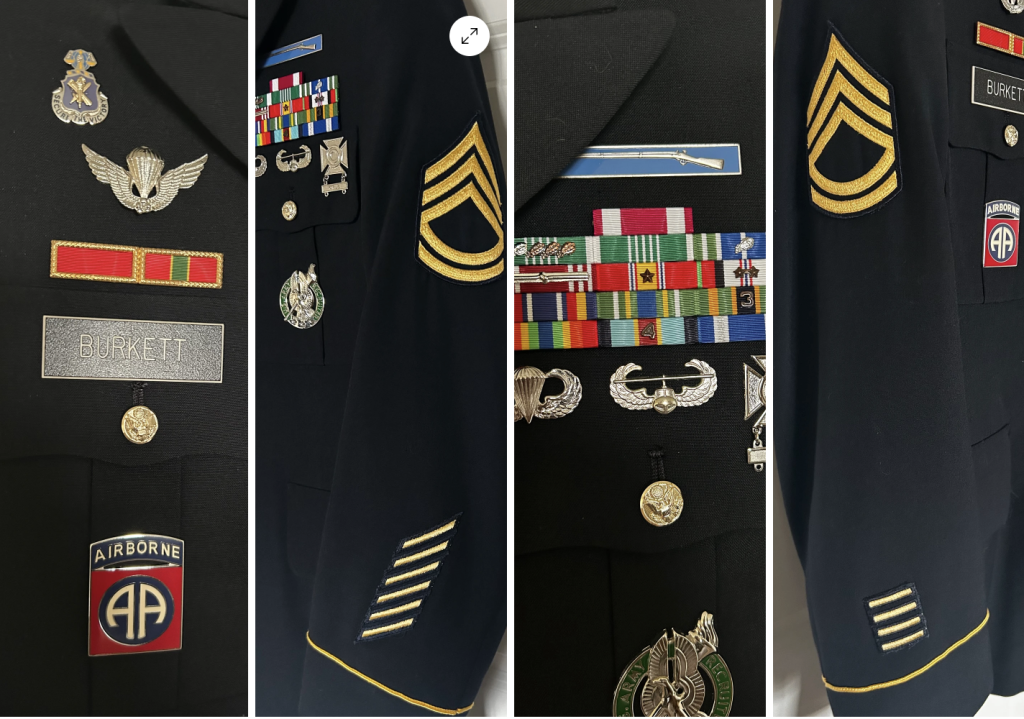
The Church Taught Me to Love My Enemies—Then Blessed Me as I Went to War By Jason Burkett, US Army veteran and friend of PCI
I joined the Army twice. The first time (1989-1996), I was a junior in high school, the summer before my senior year. My dad was a truck driver, my mom was a teacher, and we didn’t have much money. I knew my parents couldn’t afford to send both my sister and me to college, and back in the late ’80s and early ’90s, it was all anyone talked about: college, college, college. My dad had served in Vietnam. My grandfather — my mom’s father — served thirty years in the Marine Corps. So joining felt like a family thing to do. I signed the papers in what’s called the Delayed Entry Program and chose the Infantry, even though my test scores were high enough that I could have done pretty much anything in the Army. I wanted to be like my dad.
Seven years later, I was asked to leave for being a knucklehead. I went back to California, started college, met my wife, and had three kids. In 2006, my family and I were living in Missouri, and I was working as a Local Veterans Employment Representative for the state of Missouri — helping veterans find jobs — but the benefits for a family of five ran about $600 a month. I couldn’t afford it. Then I started getting emails from the military: We’re looking for veterans. I already knew what was on the other side of that door. Great medical, great dental, housing, guaranteed promotions, and pay raises. And bonuses. My first reenlistment bonus was around $25,000. When I was deployed in Afghanistan a few years later, I reenlisted again while I was in-country — that bonus was tax-free. Some Green Beret guys were getting $100,000 or more to stay in. The military was the best option for my family, full stop.
But the second time I joined (2006-2019), I was also a Christian. And that added another layer to why I went back. During my first enlistment, I was in a dark place. I went to see chaplains — more than once. Not one of them ever asked me about following Jesus, about the way of Jesus, about anything that actually touched the soul of what I was going through. I knew that going back in, I could be something different for soldiers. I deliberately chose to enlist and work my way to becoming a non-commissioned officer (NCO) rather than an officer because NCOs are always in charge of lower enlisted guys. Always. I wanted to be present with them, to be somebody they could actually talk to about life. That was real to me.
What I never heard — not once — was anyone suggesting that returning to the military might not be the way of the church. I had never heard of conscientious objectors, and I now see that Scripture calls us to love and nonviolence, which should inspire my Christian Brothers and Sisters with hope for a different Christian path. read more…
Embodied Integrity Through Beauty and Resistance – Jonathan Walton
Embodied Integrity Through Beauty and Resistance Adapted from Beauty and Resistance by Jonathan Walton In 2 Corinthians 5, we learn that we are Christ’s ambassadors and have been given the ministry of reconciliation. In Acts 1 we read that we will be his witnesses. It...
A More Merciful Beginning: Jesus’ and the Qur’an’s Shared Response to the Fall – Safi Kaskas
A More Merciful Beginning: Jesus' and the Qur'an's Shared Response to the Fall By: Safi Kaskas Introduction: A History Begging for Mercy For centuries, the story of humanity’s beginning has been told as a tragedy. In Western Christian theology, the...
A More Merciful Beginning: the Qur’anic Response to the Fall – by Safi Kaskas
Adamo id Eva - 1790 Editor's Note: In the spirit of multi-faith friendship and collaboration, we share Safi Kaskas's paper on "A More Merciful Beginning: The Qur'anic Response to the Fall," which highlights key aspects of how the Qur'an...
Lauren Southern’s “This is Not Real Life” – Review by Luke Schulz
The Private Implosion and Quest for Redemption of a Notorious Public Figure Lauren Southern’s This is not Real Life – A Memoir in Review Review by Luke Schulz Full disclosure: I know Lauren Southern personally. We have never been close, but back...
The Cross: Somber Joy or Blasphemous Spectacle? – David Goa
Take the suffering—all the expressions of the passions in this life—of the world on yourself rather than passing it on. If we don’t take them on ourselves, we react to them and reduce them to reciprocity. We could bring an end to that. Don’t presume about it. Don’t...
When Empires Rage and the Church Sleeps: An Afrikaner’s Perspective on the Palestine Israel Conflict – by David J. Kleinhans
Photo by John Robinson.Young Afrikaners wave the then South African flag, some armed with guns, make the yearly pilgrimage to the Voortrekker Monument on signal hill overlooking the city of Pretoria. The Christian Nationalist government of the apartheid South Africa...
T.S. Eliot and Four Quartets: The Wisdom Way – Ron Dart
T.S. Eliot and Four Quartets: The Wisdom Way I Introduction Eliot and the Fragmented West Old men ought to be explorers Here and there does not matter We must be still and still moving Into another intensity For a further union, a deeper communion...
Paul Zizka’s The Canadian Rockies Rediscovered – Review by Ron Dart
Paul Zizka’s The Canadian Rockies Rediscovered – Review by Ron Dart There are “A”, “B” and “C” level novels that hold the reader for different reasons, but it is the classical “A” books we return to many times in our all too human journey. There can be no doubt that...
Paul Zizka’s The Canadian Rockies Rediscovered – Review by Ron Dart
Paul Zizka’s The Canadian Rockies Rediscovered – Review by Ron Dart There are “A”, “B” and “C” level novels that hold the reader for different reasons, but it is the classical “A” books we return to many times in our all too human journey. There can be no doubt that...
Traumatic Tradition isn’t ‘too Christian’ but not Christian Enough – Christian Hollums
What if the parts of you that doubted, questioned, or even walked away weren’t signs of spiritual failure—but signs of something deeper trying to survive? This piece is born from the intersection of theology and therapy, of David Bentley Hart’s Tradition and...